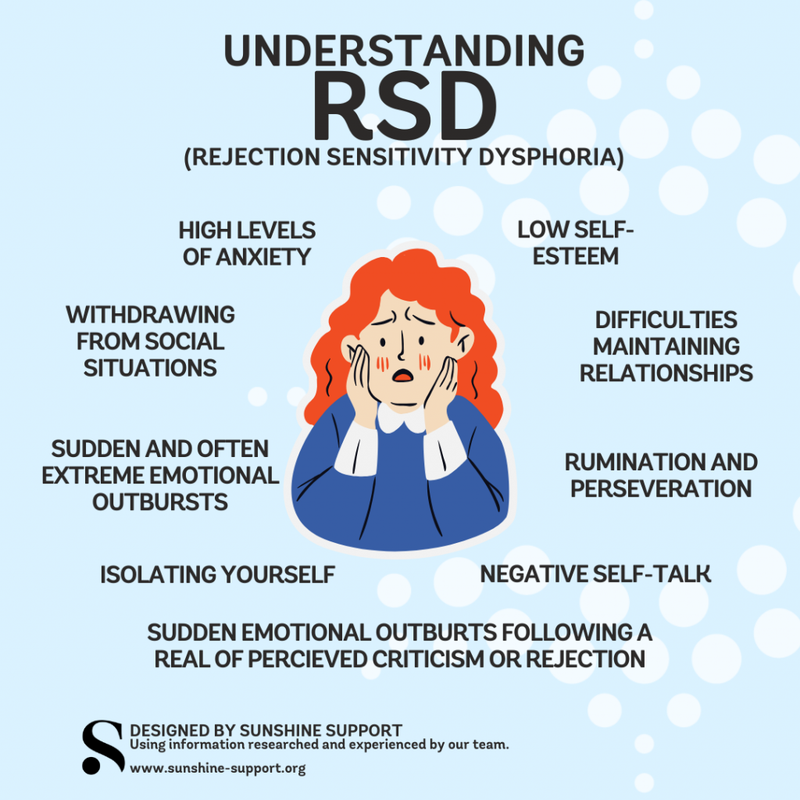
What is Rejection Sensitivity?
- Emotional responses to perceived rejection can be immediate and intense.
- Triggers include neutral messages, tone changes, being left on "read," constructive feedback, or feeling excluded.
- Common reactions: overwhelm, shame, anger, anxiety, withdrawal.
Connection to Neurodiversity and ADHD
- Many with neurodiversity and ADHD experience emotional dysregulation.
- Emotions can rise quickly, feel intense, and take longer to settle.
- Rejection Sensitive Dysphoria (RSD) describes intense emotional pain from perceived rejection.
Why Small Comments Feel Big
- The brain may interpret minor social cues as threats.
- Emotional responses can override logical thinking.
Emotional Cycle of Rejection Sensitivity
- Trigger (comment or social cue)
- Instant emotional reaction
- Interpretation (e.g., "I’ve done something wrong")
- Rumination
- Protective response (withdrawal, people-pleasing)
Impact on Relationships and Self-Esteem
- Avoidance of difficult conversations
- Over-apologising
- Difficulty trusting reassurance
- Fear of being "too much" or "not good enough"
- Strain in relationships and work
How can I Help you
- Recognising rejection sensitivity patterns
- Emotional regulation skills
- Challenging negative interpretations
- Addressing underlying neurodiversity or anxiety
- Therapy to build tolerance, self-worth, and reduce rumination
When is the time to seek support from me
- Frequent overwhelm from social interactions
- Replaying conversations often
- Emotional instability in relationships
- Feeling misunderstood or "too sensitive"
- Low self-esteem is linked to others' responses.
Rejection sensitivity is a natural response linked to emotional regulation and nervous system sensitivity. With support, it is possible to experience emotions more deeply, with less overwhelm and greater stability in relationships.